
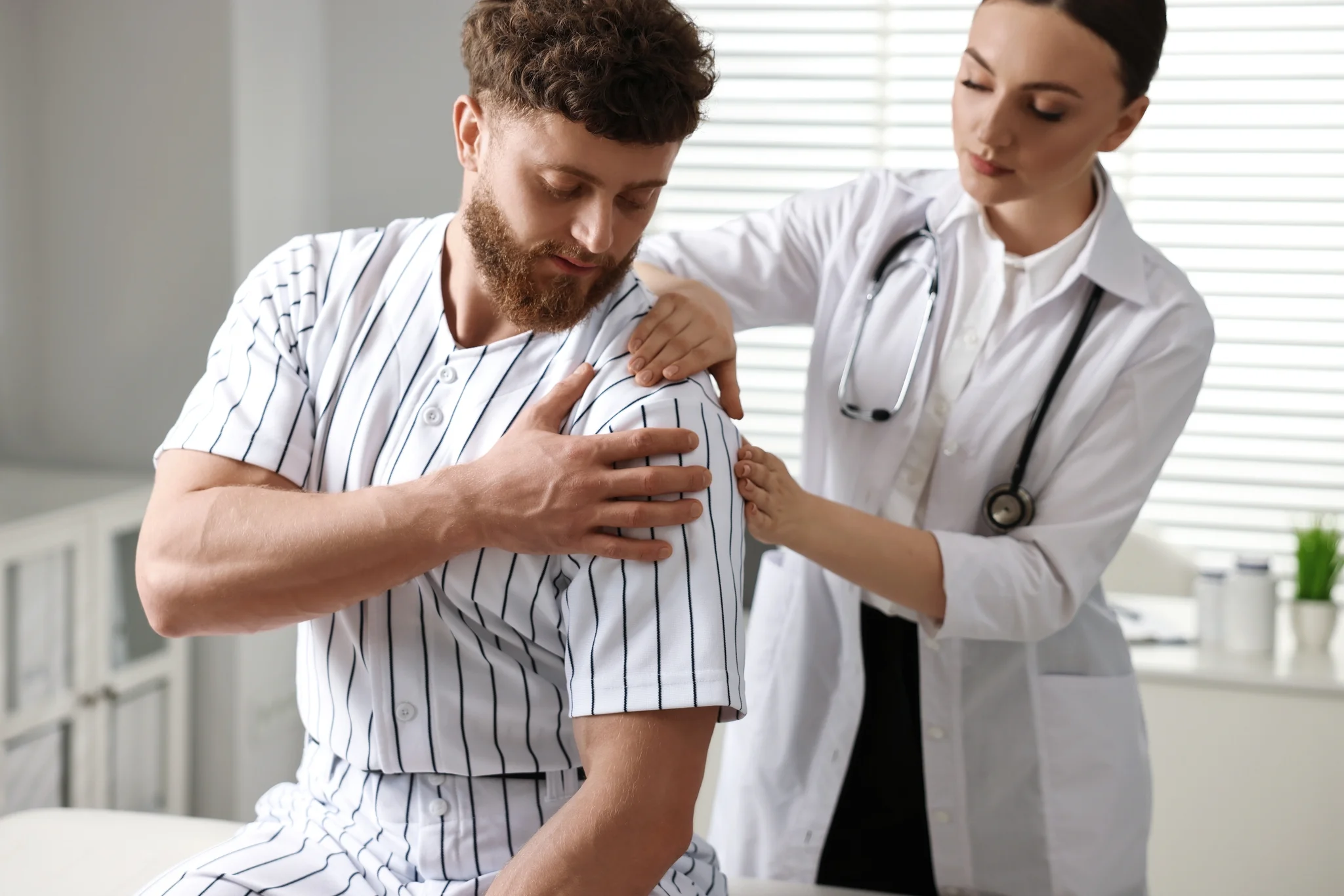
SLAP Tear Care in Coachella Valley
A SLAP tear is a common shoulder injury that affects the cartilage lining the shoulder socket. The term SLAP stands for Superior Labrum Anterior to Posterior, meaning the injury occurs in the upper portion of the labrum where the biceps tendon attaches to the shoulder.
SLAP tears can cause pain, weakness, loss of performance, and difficulty performing overhead activities. These injuries are especially common among athletes who participate in throwing sports, but they can also occur as a result of falls, accidents, and age-related degeneration. At Spencer Orthopedics, we provide comprehensive diagnosis and treatment options for SLAP tears to help patients restore shoulder function and return to the activities they enjoy.
What Is a SLAP Tear?
The labrum is a ring of cartilage that surrounds the shoulder socket and helps stabilize the joint. A SLAP tear occurs when the upper portion of the labrum becomes damaged. Because the biceps tendon attaches to this area, the injury can affect both shoulder stability and arm function.
Common Causes of SLAP Tears
Acute Injuries
- Falling onto an outstretched arm
- Shoulder dislocation
- Sudden pulling injuries or heavy lifting
- Motor vehicle accidents
- Direct trauma to the shoulder
Repetitive Overhead Activities
Repeated overhead motion can gradually place stress on the labrum, often seen in:
- Baseball pitchers
- Tennis players and swimmers
- Volleyball players and weightlifters
- Construction workers and painters
As individuals age, the labrum naturally undergoes wear and tear, making it more susceptible to injury.
Symptoms of a SLAP Tear
- Deep shoulder pain and pain with overhead activities
- Clicking, popping, or catching sensations
- Weakness in the shoulder
- Loss of throwing velocity or accuracy
- Decreased athletic performance
- Shoulder stiffness or feeling of instability
- Difficulty lifting objects
Diagnosing a SLAP Tear
An orthopedic specialist may evaluate range of motion, shoulder stability, muscle strength, and reproduce symptoms through specialized tests. Although SLAP tears do not appear directly on X-rays, imaging helps identify arthritis and other structural issues. MRI is commonly used to evaluate the labrum, and an MR arthrogram with contrast dye may provide a more detailed view of the tear.
Non-Surgical Treatment Options
Many patients experience significant improvement with activity modification, physical therapy focusing on shoulder mechanics and rotator cuff strengthening, anti-inflammatory medications, and corticosteroid injections to reduce inflammation.
Surgical Treatment for SLAP Tears
Surgery may be considered when symptoms persist, significant instability is present, athletic performance is affected, or the tear is extensive.
Arthroscopic SLAP Repair
Many SLAP tears can be repaired arthroscopically through small incisions. The damaged labrum is reattached to the shoulder socket using anchors and sutures.
Biceps Tenodesis
In some patients, particularly older adults, biceps tenodesis may be recommended. This technique repositions the attachment of the biceps tendon to reduce stress on the damaged labrum. The most appropriate procedure depends on age, activity level, and the specific characteristics of the injury.
Recovery and Rehabilitation
Recovery following treatment includes initial protection of the shoulder, gradual restoration of motion, progressive strengthening exercises, functional rehabilitation, and sport-specific training when appropriate. Athletes may require several months of rehabilitation before returning to competitive activities.
When Should You See an Orthopedic Specialist?
You should seek evaluation if you experience:
- Persistent shoulder pain or clicking sensations
- Weakness during overhead activities
- Loss of throwing performance or shoulder instability
- Symptoms that interfere with work, sports, or daily activities
If you are experiencing shoulder pain, weakness, or loss of performance during overhead activities, contact Spencer Orthopedics today to schedule a consultation and learn about your treatment options for a SLAP tear.


