
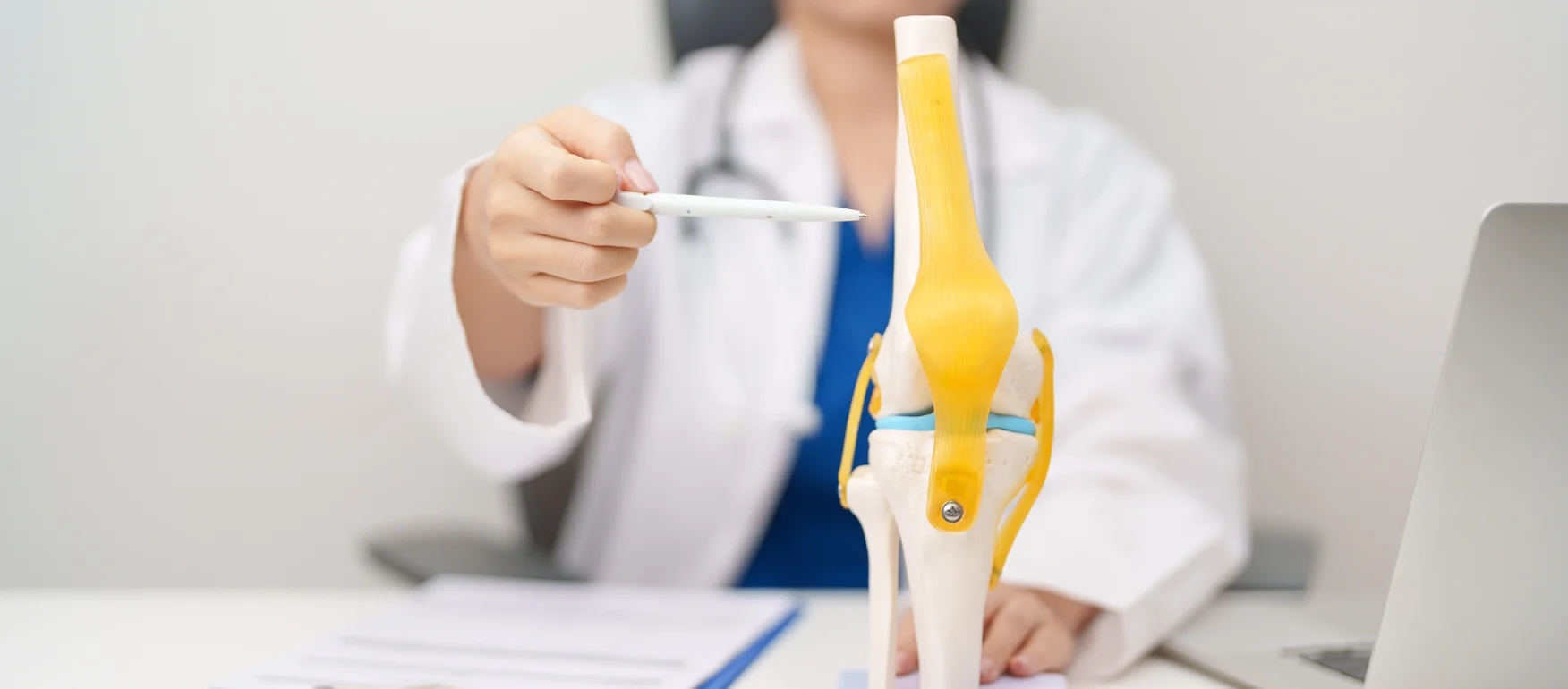
PCL Tear Treatment in Coachella Valley
Understanding PCL Tears
A posterior cruciate ligament (PCL) tear is a knee injury that occurs when one of the major stabilizing ligaments inside the knee becomes stretched or torn. Although less common than ACL injuries, PCL tears can significantly affect knee stability, strength, and overall function.
The PCL plays an important role in preventing the shin bone from moving backward relative to the thigh bone. Injuries to this ligament often occur during sports, falls, or motor vehicle accidents and may range from mild sprains to complete ruptures.
At Spencer Orthopedics, we provide comprehensive diagnosis and treatment for PCL injuries, helping patients restore knee stability and return to their desired activities.
What Is the PCL?
The posterior cruciate ligament (PCL) is one of the four primary ligaments that stabilize the knee.
The PCL connects:
- The femur (thigh bone)
- The tibia (shin bone)
Its primary functions include:
- Preventing the tibia from moving backward
- Supporting knee stability
- Assisting with rotational control
- Maintaining proper joint mechanics during movement
The PCL is stronger and thicker than the ACL, which contributes to its lower injury rate.
What Is a PCL Tear?
A PCL tear occurs when the ligament is stretched beyond its normal limits or torn.
PCL injuries are generally classified as:
Grade I
A mild sprain involving microscopic ligament damage.
Grade II
A partial tear resulting in increased ligament laxity.
Grade III
A complete ligament rupture with significant instability.
PCL tears may occur alone or in combination with injuries to other knee ligaments, cartilage, or menisci.
Common Causes of PCL Tears
PCL injuries are often caused by direct force applied to the front of the shin while the knee is bent.
Sports Injuries
Athletes may sustain PCL injuries during:
- Football
- Soccer
- Rugby
- Wrestling
- Skiing
Falls
Falling directly onto a bent knee can place excessive stress on the PCL.
Motor Vehicle Accidents
A classic mechanism occurs when the shin strikes the dashboard during a collision, often referred to as a "dashboard injury."
Direct Trauma
Blows to the front of the knee during contact sports may result in PCL damage.
Symptoms of a PCL Tear
Symptoms can vary depending on the severity of the injury.
Common symptoms include:
- Knee pain
- Swelling
- Stiffness
- Difficulty walking
- Knee instability
- Pain when descending stairs
- Reduced athletic performance
- Feeling that the knee is not functioning normally
Compared to ACL injuries, swelling may develop more gradually and instability may be less obvious initially.
Diagnosing a PCL Tear
Accurate diagnosis is important because untreated PCL injuries can alter knee mechanics and contribute to long-term joint damage.
Physical Examination
Your orthopedic specialist may evaluate:
- Knee stability
- Range of motion
- Swelling
- Strength
- Functional limitations
Specialized ligament tests help determine the integrity of the PCL.
Imaging Studies
X-Rays
X-rays help identify fractures and associated bone injuries.
MRI
MRI is the most effective imaging study for evaluating:
- Partial tears
- Complete ruptures
- Meniscus injuries
- Cartilage damage
- Associated ligament injuries
MRI provides detailed visualization of the knee's soft tissue structures.
Non-Surgical Treatment Options
Many isolated PCL injuries can be treated successfully without surgery.
Physical Therapy
Rehabilitation may focus on:
- Restoring motion
- Strengthening the quadriceps muscles
- Improving stability
- Enhancing balance and coordination
Bracing
Specialized braces may help support the knee during healing.
Activity Modification
Avoiding activities that place excessive stress on the knee can promote recovery.
Pain Management
Medication and ice therapy may help reduce pain and inflammation.
Surgical Treatment for PCL Tears
Surgery may be recommended when:
- Significant instability exists
- Multiple ligaments are injured
- Symptoms persist despite conservative treatment
- Athletic goals require higher levels of knee stability
PCL Reconstruction
During reconstruction surgery:
- The damaged ligament is replaced with a graft
- Knee stability is restored
- Joint mechanics are improved
Common graft options include:
- Hamstring tendon grafts
- Quadriceps tendon grafts
- Donor tissue (allografts)
The choice of graft depends on individual patient factors and surgeon recommendations.
Recovery and Rehabilitation
Recovery depends on the severity of the injury and whether surgery is required.
Non-Surgical Recovery
Many patients can gradually return to activity through rehabilitation and strengthening programs.
Surgical Recovery
Following PCL reconstruction, rehabilitation typically includes:
- Swelling control
- Range-of-motion exercises
- Progressive strengthening
- Functional training
- Sport-specific rehabilitation
Recovery timelines vary based on individual goals and activity levels.
Potential Complications of Untreated PCL Tears
Without proper treatment, a PCL injury may lead to:
- Chronic instability
- Abnormal knee mechanics
- Meniscus damage
- Cartilage wear
- Early arthritis
- Decreased athletic performance
Early evaluation can help reduce the risk of long-term complications.
When Should You See an Orthopedic Specialist?
You should seek evaluation if you experience:
- Knee pain after an injury
- Swelling or stiffness
- Difficulty walking
- Instability during activity
- Ongoing symptoms that do not improve
- Reduced athletic performance
Prompt diagnosis can help preserve knee function and improve treatment outcomes.
Schedule an Appointment
If you are experiencing knee pain, instability, or symptoms of a PCL injury, contact Spencer Orthopedics today to schedule an evaluation and learn more about your treatment options.


