
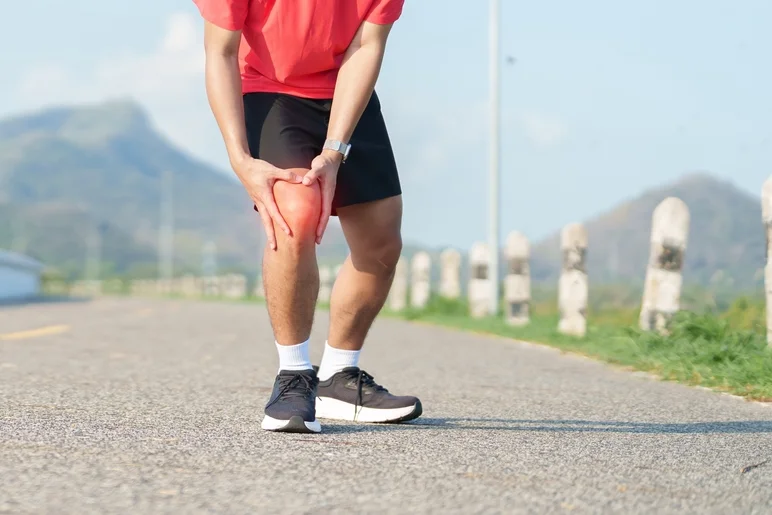
LCL Tear Treatment in Coachella Valley
Understanding LCL Tears
A lateral collateral ligament (LCL) tear is an injury affecting one of the primary stabilizing ligaments of the knee. The LCL is located on the outside of the knee and helps prevent excessive outward movement of the joint while maintaining overall knee stability.
Although LCL injuries are less common than MCL injuries, they can significantly impact knee function and often occur in conjunction with other ligament injuries. Prompt diagnosis and appropriate treatment are important to restore stability and prevent long-term complications.
At Spencer Orthopedics, we provide comprehensive diagnosis and treatment for LCL injuries, helping patients recover safely and return to their desired activities.
What Is the LCL?
The lateral collateral ligament (LCL) is a strong band of connective tissue that runs along the outer side of the knee.
The LCL connects:
- The femur (thigh bone)
- The fibula (smaller lower leg bone)
Its primary functions include:
- Stabilizing the outer knee
- Preventing excessive outward bending of the joint
- Supporting rotational stability
- Assisting with overall knee function during movement
Unlike the MCL, the LCL is not directly attached to the meniscus, which affects injury patterns and healing characteristics.
What Is an LCL Tear?
An LCL tear occurs when the ligament is stretched beyond its normal limits or partially or completely torn.
LCL injuries are generally classified into three grades:
Grade I
A mild sprain involving microscopic damage to the ligament.
Symptoms are typically mild with little or no instability.
Grade II
A partial tear resulting in increased laxity and moderate symptoms.
Patients may experience pain, swelling, and instability during activity.
Grade III
A complete rupture of the ligament.
This type of injury can result in significant knee instability and often requires more advanced treatment.
Common Causes of LCL Tears
LCL injuries typically occur when force is applied to the inside of the knee, causing excessive stress on the outer structures.
Contact Sports
Common sports associated with LCL injuries include:
- Football
- Soccer
- Rugby
- Hockey
- Wrestling
Direct Trauma
A blow to the inside of the knee may stretch or tear the ligament.
Twisting Injuries
Sudden pivoting movements can place excessive strain on the LCL.
Falls
Falls involving awkward knee positioning may contribute to injury.
Multi-Ligament Injuries
LCL tears frequently occur alongside injuries involving:
- ACL tears
- PCL tears
- Posterolateral corner injuries
- Meniscus injuries
Symptoms of an LCL Tear
Symptoms vary depending on injury severity.
Common symptoms include:
- Pain on the outside of the knee
- Swelling
- Tenderness along the ligament
- Knee instability
- Difficulty walking
- Stiffness
- Reduced range of motion
- Feeling that the knee may give way
More severe injuries may significantly affect athletic performance and daily function.
Diagnosing an LCL Tear
Accurate diagnosis is important because LCL injuries are often associated with damage to other structures within the knee.
Physical Examination
Your orthopedic specialist may assess:
- Knee stability
- Swelling
- Areas of tenderness
- Range of motion
- Functional limitations
Specific ligament stress tests help evaluate the integrity of the LCL.
Imaging Studies
X-Rays
X-rays may help identify fractures or other bone-related injuries.
MRI
MRI is commonly used to evaluate:
- LCL injuries
- Associated ligament tears
- Meniscus injuries
- Cartilage damage
- Posterolateral corner injuries
MRI provides detailed information necessary for treatment planning.
Non-Surgical Treatment Options
Many mild and moderate LCL injuries can be managed successfully without surgery.
Activity Modification
Avoiding activities that aggravate symptoms allows healing to occur.
Bracing
A supportive knee brace may help stabilize the knee during recovery.
Physical Therapy
Rehabilitation may focus on:
- Restoring mobility
- Improving strength
- Enhancing stability
- Correcting movement mechanics
- Returning safely to activity
Ice and Anti-Inflammatory Medication
These treatments may help reduce pain and swelling.
Surgical Treatment for LCL Tears
Surgery may be recommended when:
- A complete rupture is present
- Significant instability exists
- Multiple ligaments are injured
- Conservative treatment is unsuccessful
LCL Repair
In some cases, the torn ligament can be repaired directly.
LCL Reconstruction
More severe injuries may require reconstruction using graft tissue to restore stability.
Combined Ligament Reconstruction
Patients with multiple ligament injuries may require more complex surgical procedures to restore knee function.
Recovery and Rehabilitation
Recovery depends on injury severity and treatment approach.
Non-Surgical Recovery
Many patients experience improvement through physical therapy and progressive strengthening.
Surgical Recovery
Following reconstruction, rehabilitation typically includes:
- Swelling management
- Range-of-motion exercises
- Progressive strengthening
- Functional training
- Return-to-sport preparation
Recovery timelines vary based on the extent of injury and individual goals.
Potential Complications of Untreated LCL Tears
Without appropriate treatment, LCL injuries may lead to:
- Chronic instability
- Recurrent knee injuries
- Reduced athletic performance
- Cartilage damage
- Meniscus injuries
- Early arthritis
Early intervention can help protect long-term knee health.
When Should You See an Orthopedic Specialist?
You should seek evaluation if you experience:
- Outer knee pain after an injury
- Knee instability
- Swelling
- Difficulty walking
- Symptoms that do not improve
- Limitations during sports or exercise
Prompt diagnosis can help determine the extent of the injury and guide effective treatment.
Schedule an Appointment
If you are experiencing knee pain, instability, or symptoms of an LCL injury, contact Spencer Orthopedics today to schedule an evaluation and learn more about your treatment options.


